
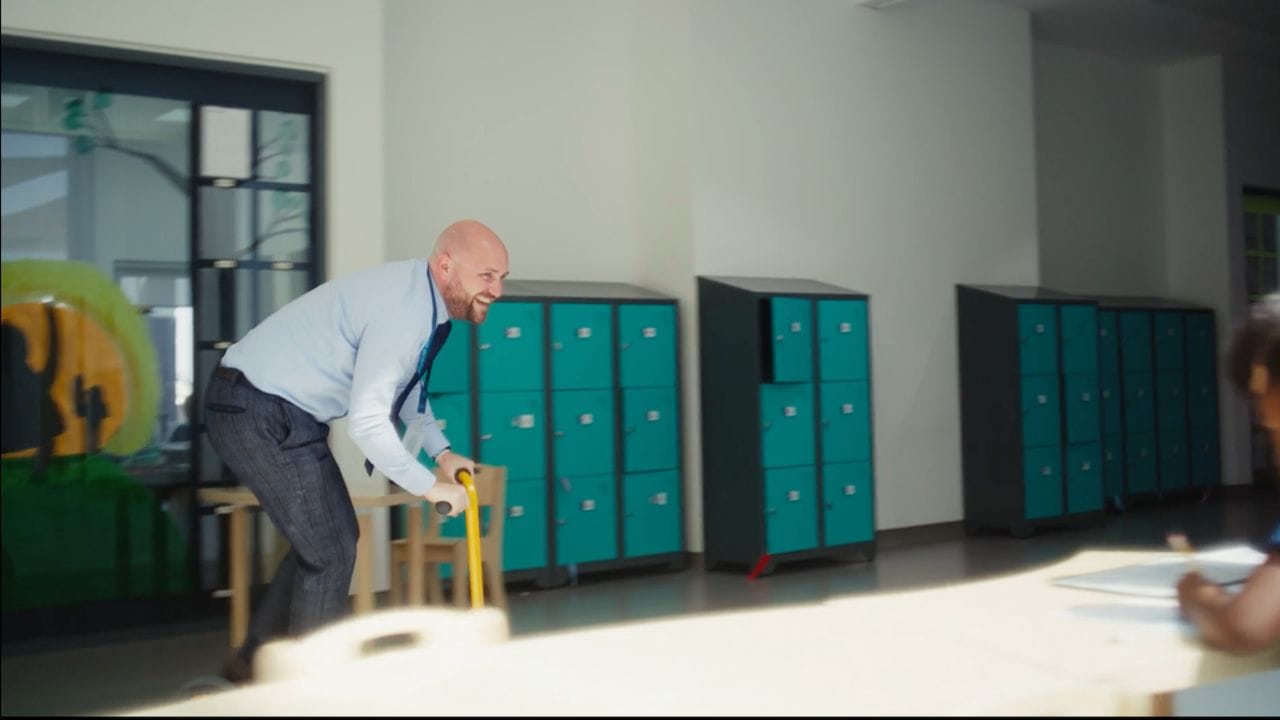
New research reveals many parents feel pressure to constantly improve
Remember when hobbies were just hobbies?
You’d read a book because you enjoyed it. Go for a walk because the weather was nice. Pick up a paintbrush, kick a football around, or spend an afternoon doing absolutely nothing productive at all.
Today, things feel a little different.
Our steps are counted. Our sleep is scored. Social media feeds are packed with productivity gurus, wellness routines and self-improvement advice promising to help us become a better version of ourselves.
Even downtime can start to feel like another item on the to-do list.
Perhaps that’s why, on International Day of Play, Nord Anglia Education invited children to do something unusual: give their parents permission to have fun.
As part of its Permission to Play campaign, students wrote permission slips encouraging mums and dads to switch off, spend time together and embrace activities with no productive outcome attached.

The campaign taps into a growing feeling that many adults have forgotten how to simply enjoy themselves.
And according to new research from Nord Anglia Education, parents across the UAE are beginning to feel the strain of a culture that constantly pushes them to do more, achieve more and optimise every aspect of life
And many parents are beginning to feel the strain.
The education group’s new Permission to Play Report surveyed more than 500 UAE parents and found that while most people recognise the importance of play and enjoyment, modern life is making it increasingly difficult to embrace either.
A striking 82 per cent of parents say it’s harder to switch off today than it was when they were children, while more than half believe the culture of constant tracking, measuring and optimisation is actually increasing anxiety. Just 8 per cent believe it makes people happier.
At the same time, 91 per cent agree that play is important for adult wellbeing.
It’s a contradiction many people will recognise.
We know we need rest, fun and downtime, yet many of us struggle to enjoy activities that don’t produce a measurable result.
In fact, more than half of parents surveyed admitted feeling guilty spending time on something with no obvious productive outcome.
The findings arrive amid growing conversations around “optimisation culture”; the idea that every aspect of life, from fitness and careers to relationships and leisure time, should be constantly improved and measured.
But experts warn that there may be a downside to living life as a never-ending self-improvement project.
Elizabeth Lamb, Regional Managing Director for the Middle East at Nord Anglia Education, says modern adults have lost sight of something children understand naturally: the importance of play.
“Children rarely need permission to play, but many adults feel they need permission to stop,” she explains.
“While people recognise the value of downtime, today’s culture of productivity and optimisation often makes play feel like a luxury.
Lamb argues that this mindset is misplaced, adding that “play is not time wasted” but something essential for wellbeing, creativity, relationships and resilience.

The findings come amid growing conversations around “optimisation culture”, driven by fitness trackers, productivity hacks and self-improvement trends.
According to educational psychologist Dr Ruba Tabari, there is a contradiction in trying to achieve wellbeing through constant measurement.
“We seem to live in an age where the pressure to optimise every aspect of life has become almost unavoidable,” she says.
Tabari warns that relying too heavily on external indicators can disconnect people from intuition and presence.
She also notes that playfulness often disappears with age because it seems “trivial or unproductive”, despite the fact that those carefree moments can reduce stress, strengthen relationships and bring genuine joy.
For Kathryn Kelly, Assistant Head and PYP Coordinator at Swiss International Scientific School Dubai, the conversation around play extends far beyond wellbeing.
“One of the greatest misconceptions about play is that it sits outside of learning. In reality, play is how children learn best,” she says.
Kelly believes curiosity, creativity and human connection are “foundations for success”, not distractions from it. Through play, children build confidence, communication skills and problem-solving abilities; a lesson she believes adults could benefit from remembering too.
To help challenge that mindset, Nord Anglia launched its Permission to Play campaign on International Day of Play, inviting children to write permission slips encouraging their parents to do something purely for fun.
It’s a simple idea, but perhaps an important one.
After all, children rarely need reminding to play. Adults, on the other hand, often need permission.
And maybe that’s the real lesson here. Not everything valuable needs to be productive. Sometimes the most beneficial thing you can do is put down the tracker, ignore the metrics and simply enjoy the moment.
For further information, visit nordangliaeducation.com

