
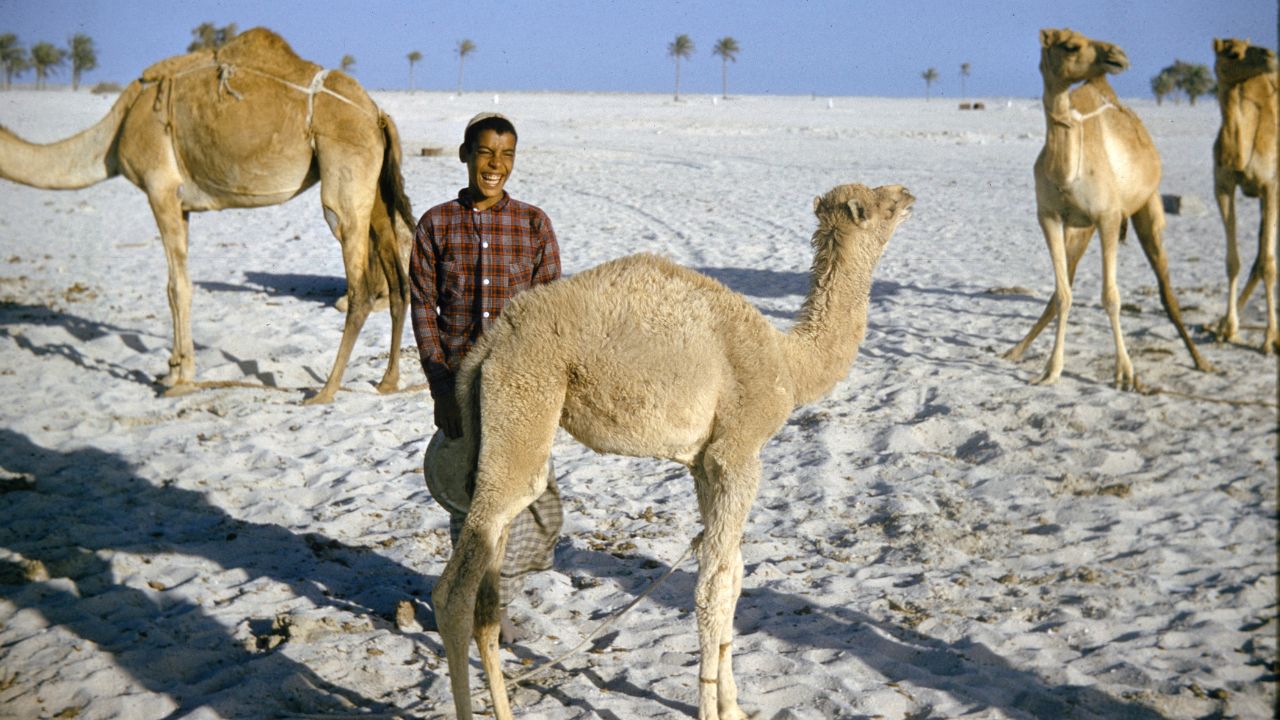
Tracks Through Time opens at Zayed National Museum in December 2026
Forget what you think you know about camels. These desert regulars have a much bigger story to tell than carrying people across the sand, and a new exhibition at Zayed National Museum is ready to prove it.
Opening in early December 2026, Tracks Through Time: The Camel in Society, Trade and Art will explore more than 7,000 years of camel history, from ancient wild species roaming the region to the racing champions and beauty queens celebrated across the UAE today.
It is the world’s first exhibition to comprehensively explore this extraordinary history, making it a pretty big deal for an animal that has long been part of everyday life in the Emirates.
The exhibition will trace the camel’s journey through the region, looking at its role in communities, trade networks and creative traditions.
You can explore archaeological discoveries, fascinating historical objects, old photographs, film footage and stories from the people who know these animals best.
Long before modern roads, air-conditioned cars and express delivery, camels played a vital role in life across the Arabian Peninsula.
They helped people navigate challenging landscapes, supported communities and became central to the movement of goods and ideas across the region.
Tracks Through Time will take visitors back to the earliest evidence of wild camels in the UAE, before exploring the animals’ eventual domestication and their evolving relationship with humans.

The exhibition draws on archaeological discoveries from across the country, including finds that shed light on just how far back this relationship goes.
Among the highlights are wild camel bones excavated at Baynunah in Abu Dhabi, on loan from Natural History Museum Abu Dhabi, dating to the Neolithic Period between 4,500 and 4,000 BCE.
Remains from Al Sufouh in Dubai, dating to the Bronze Age, will also feature, on loan from Dubai Culture and Arts Authority.
Even more intriguing are domesticated camel bones from Saruq Al Hadid in Dubai, dating to the Iron Age. These provide some of the earliest evidence in the world for the taming and rearing of wild camels into domesticated animals.
In other words, the camel’s connection to this part of the world goes back a very long way indeed.
It is not all archaeology and ancient remains, either. The exhibition promises plenty of unexpected discoveries, including a rare children’s book from the 1840s explaining different camel species and how they were used.
Visitors can also see rock art depicting camels in Fujairah, dating back around 3,000 years, alongside UAE postage stamps featuring the animals through the decades.
It is a reminder of how the camel has moved from an essential part of daily life to an enduring symbol of the country’s identity.
There will be an audio and visual element, too, with rare archival photographs and film footage bringing the past into focus.
Recordings of Taghrooda and Alheda’a – traditional forms of camel-related oral expression, including camel calling – will feature alongside testimonies from camel herders and other community members.
Both Taghrooda and Alheda’a are recognised on UNESCO’s Representative List of the Intangible Cultural Heritage of Humanity, highlighting how the camel’s story is about more than transport or trade. It is also woven into the UAE’s living traditions, music, poetry and relationships between people and animals.
The camel’s story does not end in the distant past. The exhibition will also explore the bonds between people and camels today, culminating in the prestige of Al Hejin camel racing and Mazayna beauty competitions.
For anyone unfamiliar with the latter, Mazayna celebrates the beauty of camels, with prized animals taking centre stage in competitions that remain an important part of regional heritage.
Al Hejin racing, meanwhile, reflects the skill, dedication and traditions surrounding one of the UAE’s best-known camel sports.
Together, these traditions show how the animal continues to hold a special place in Emirati life, even as the country has transformed into a modern, international destination.
Developed using scientific research and collaboration, it brings together evidence of the camel’s history with the stories and traditions that continue to shape its place in society.
There will be more to explore than the exhibition displays alone. A public programme of workshops, tours and family activities will accompany Tracks Through Time, giving visitors different ways to get involved and discover more about the camel’s place in the UAE’s history.
A dedicated retail offering inspired by the exhibition will also be available, providing another way to take a little of the experience home.
Tracks Through Time: The Camel in Society, Trade and Art opens in early December 2026 at Zayed National Museum on Saadiyat Island, Abu Dhabi. For further information, visit zayednationalmuseum.ae

